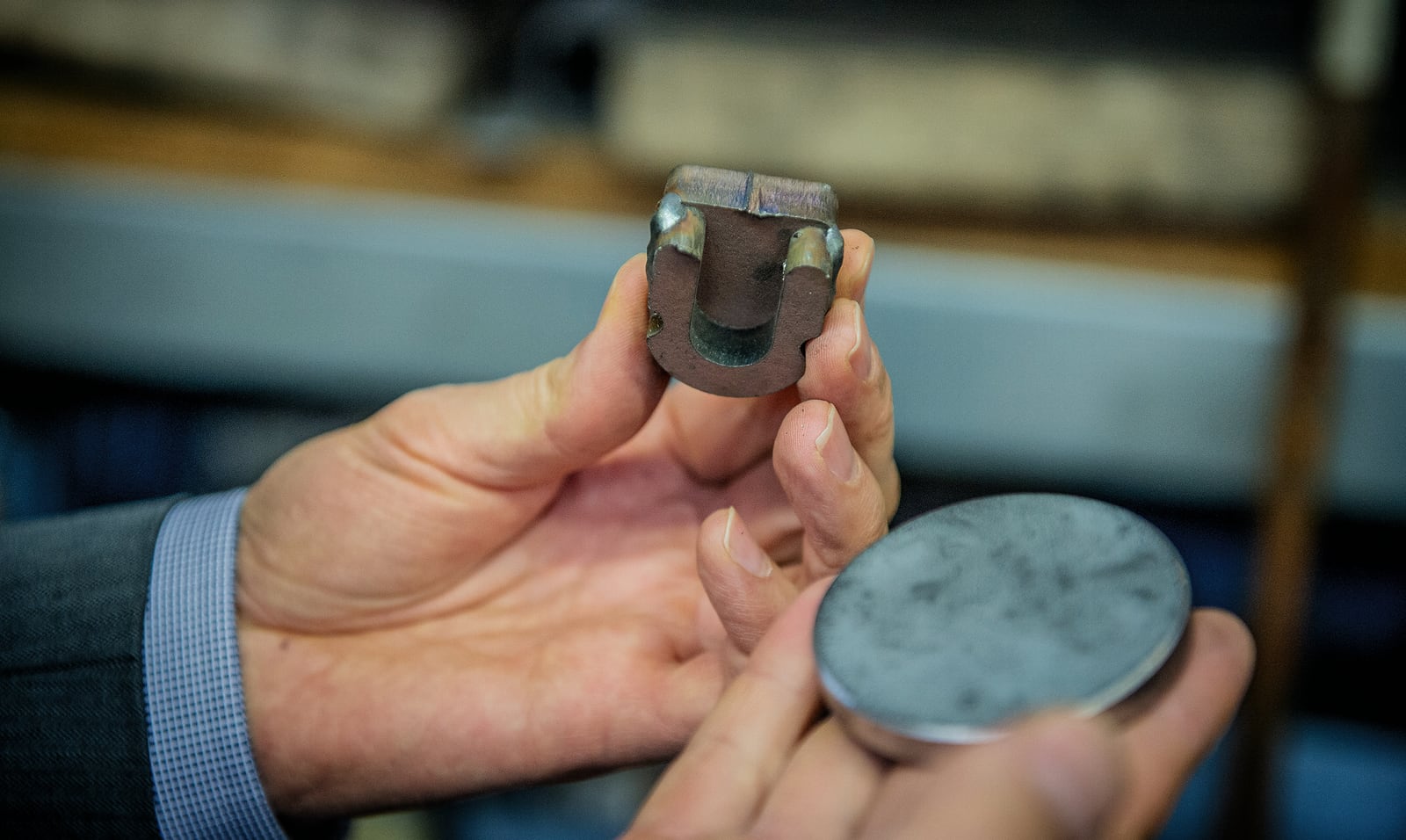
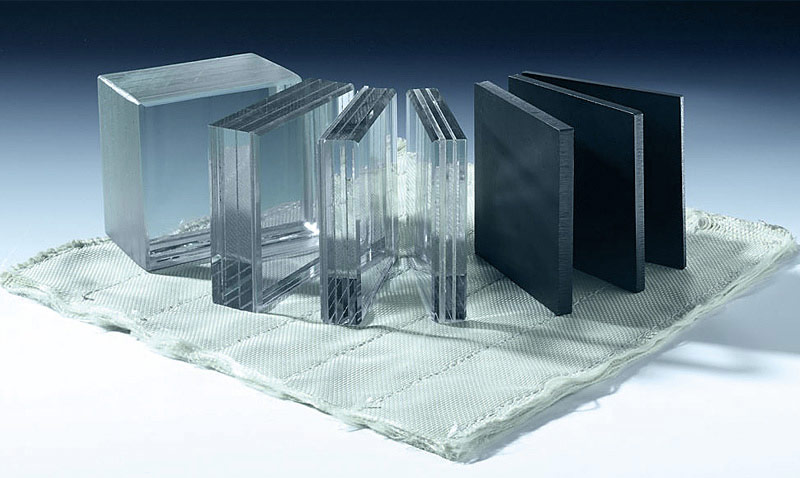
Ballistic material samples at TRASCO
Ballistic material samples at TRASCO Ballistic material testing at TRASCO

Certified ballistic protection materials

Reality-based armored vehicle solutions. Better technology means better protection – materials are chosen against the real threat, not the catalog.

Constant research

Only certified materials – nothing else

TRASCO is constantly researching and testing new armor materials – steel, composites, fibers and glass – to determine the best, lightest and most cost-effective solutions possible. Most of these tests are customer-related and therefore confidential.

To give you the necessary confidence in our armored vehicles, one thing is mandatory: we work exclusively with certified suppliers, using only materials that are fully certified and have passed the required ballistic tests for their protection level.

The real threat today

  • Improvised explosive devices (IED) spraying steel fragments at high concentration and velocity
  • Fully automatic assault rifles – multiple hits in close proximity (AK-47)
  • Compound attacks: an IED followed by assault-rifle fire
  • Increasingly prevalent armor-piercing ammunition with hardened steel cores

Know the threat

IED, fragments and AP ammunition

What is an IED?

Any handmade bomb or explosive ordnance used outside its original design intent – usually small devices hidden at the roadside or in cars. The primary threat is the shrapnel: steel fragments spraying in all directions at velocities many times faster than high-power rifle bullets.
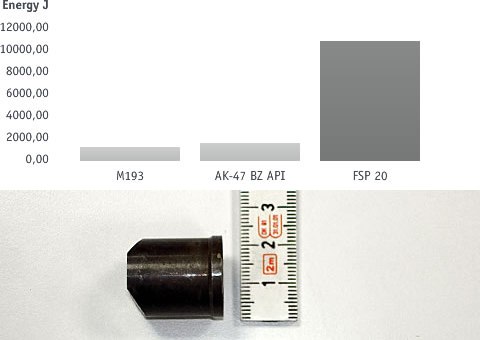
Fragment simulating projectiles (FSP) used in ballistic testing

Fragment simulating projectile (FSP)

FSPs represent sharp-edged pieces of steel bomb casings that impact with very high energy – much higher than assault-rifle bullets.

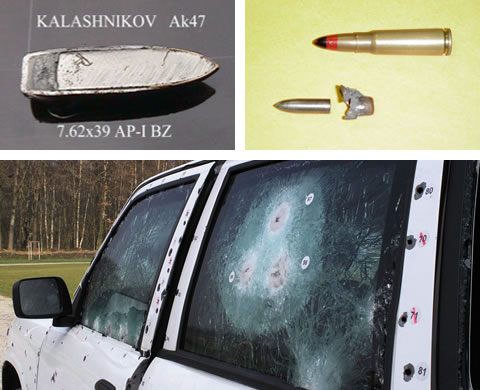
AK-47 BZ-API armor-piercing incendiary ammunition

AK-47 “Kalashnikov” BZ-API

BZ-API = armor-piercing incendiary composition: a hardened steel core with a pyrotechnic charge that ignites on impact – widespread and readily available in conflict regions.

Ballistic & blast facts

Threats are not linearly comparable

It is not possible to rank test protocols with different threats as simply “higher” or “lower” protection – every threat is unique for each armor material. Take common assault-rifle ammunition:

  • 7.62×39 PS Ball is more lethal against composite armor – because of its mild steel core
  • 5.56×45 M193 is more lethal against steel armor – because of its energy per unit area
  • 7.62×51 M80 Ball is more lethal against ballistic glass – because of its total energy

The answer: develop a test protocol that represents the current threat – and then design armor materials and a completely integrated vehicle to meet that protocol.

Our response

High-performance steel
A new steel developed by TRASCO for AP and fragmentation threats – with a weight advantage of around 30 % over standard ballistic steels.
Special multilayer glass
Multilayer ballistic glass designed against BZ-API armor-piercing rounds and high-energy fragments – multi-hit capable.
New integration methods
New armor material systems, integration methods and integrated features designed to meet the current threat – not yesterday's standard.
Tested at Mellrichstadt
Materials and complete vehicles are tested at the official German proof house – evidence instead of claims.

Full armoring

Where the protection goes

In a fully armored vehicle, the armor encloses the entire passenger compartment. The exact scope and the materials depend on the protection level and are defined for each vehicle. The A-KIP® concept, by contrast, deliberately protects only the critical areas.

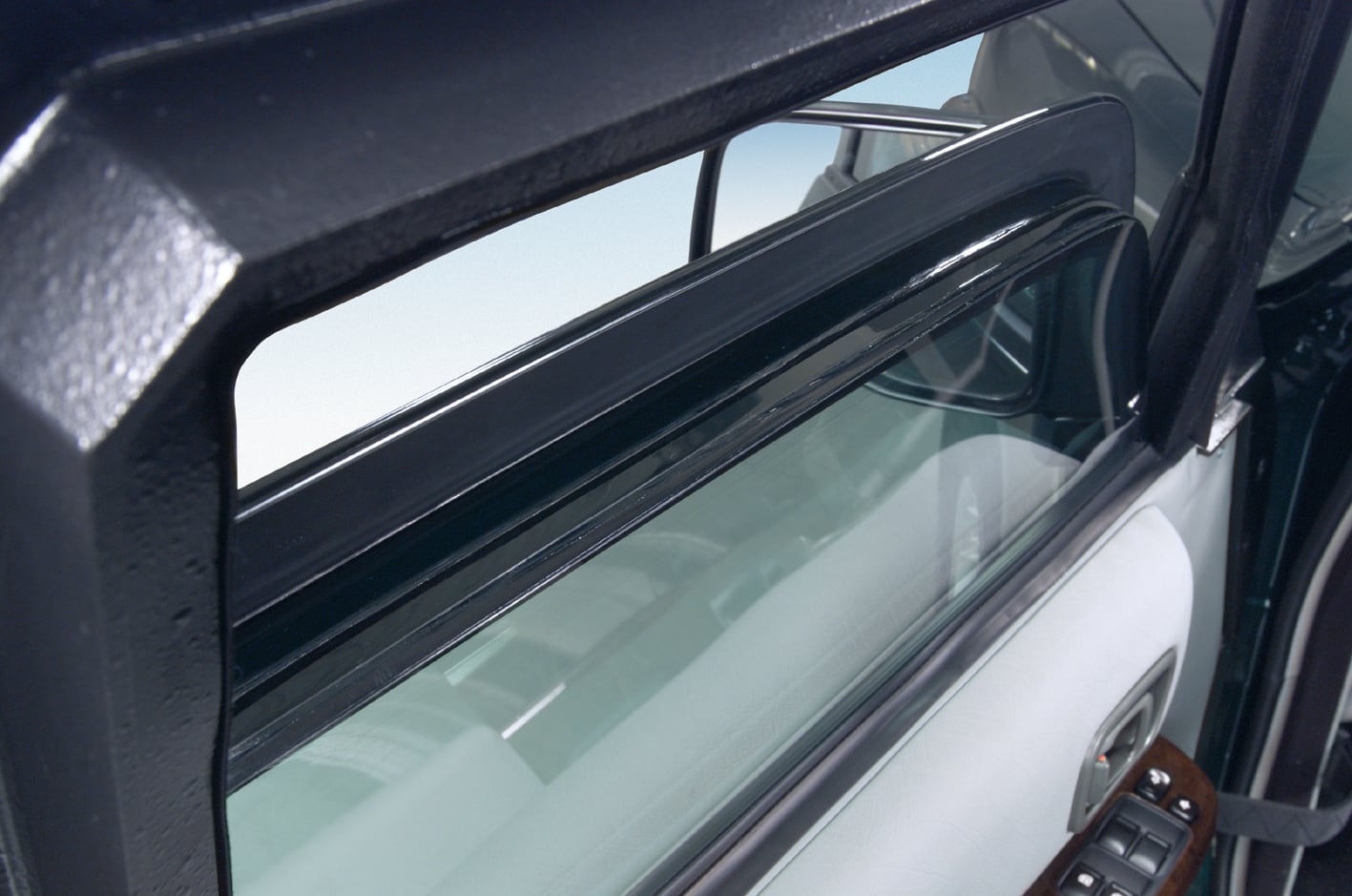
Armored door with multi-layer ballistic glass of an SUV

Transparent armor

The windshield and the door windows are replaced with multi-layer ballistic glass. A polycarbonate layer on the inside keeps glass splinters away from the occupants, and the front windows can still be lowered partially.

Steel worker welding an armor frame at the welding table

Body

Doors, pillars, roof rails, headers, roof and the rear area around the passenger compartment are armored with high-hardness ballistic steel or fiber composites.

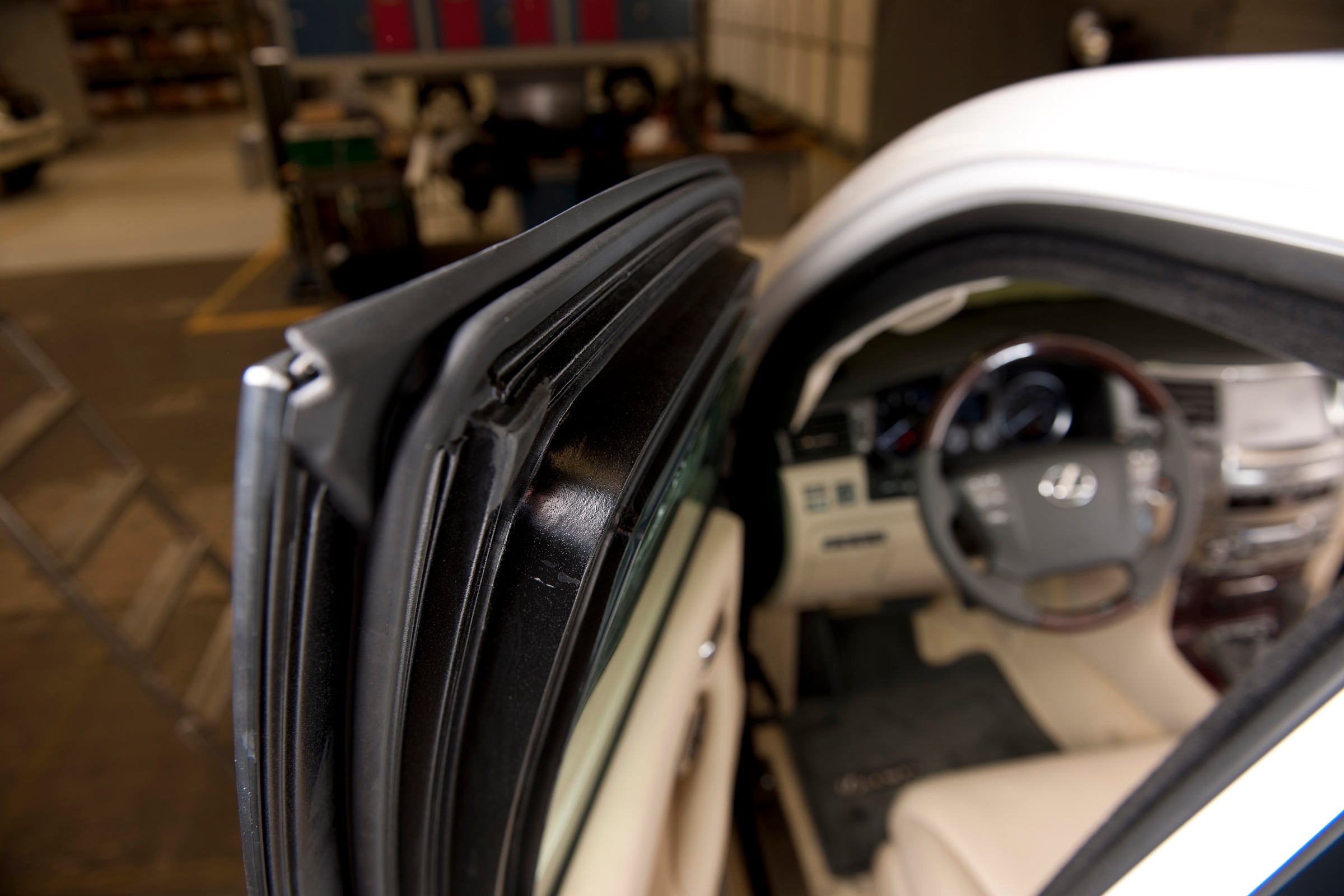
Armored door with reinforced window frame and overlapping armor at the glass edge

Overlaps

At the edges of doors and windows, the armor parts overlap, so that the gaps between doors, body and glass are closed as well.

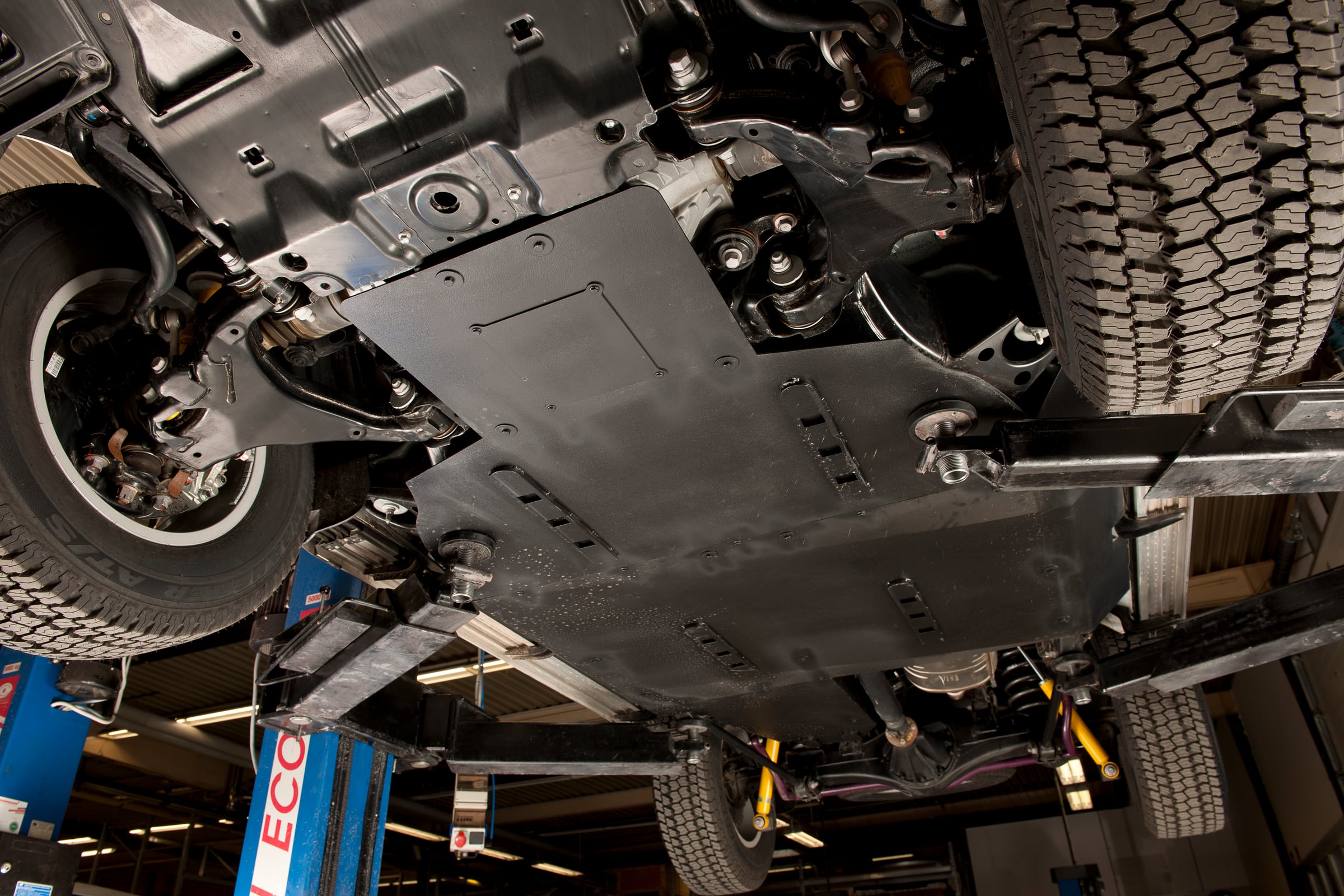
Underbody armor plates of an armored SUV on the lift

Floor

Depending on the protection level, floor armor made of high-strength steel or fiber composites protects the passenger compartment against hand grenades detonating beneath the vehicle.

Material questions?

Talk to the people who test it.

Type at least two characters – results appear as you type. Esc closes.